Restroom. Stockroom. Office. Storage. The cabinet with the alcohol in it. Every door that matters is a source of data you're throwing away.
Yedi is the platform underneath all of them.
There's a manager somewhere right now carrying three key rings. One for the gas dispensers. One for the cigarette case and the alcohol cooler. One for the back office and a desk drawer where employee files used to be kept and nobody can quite remember what's in there now.
Every door is a different lock, a different code, a different system. The complaints, the rekeys, the shrink, the after-hours alerts — they're all the same problem wearing different costumes. Yedi treats them as one problem, with one system, one dashboard, and one set of credentials.
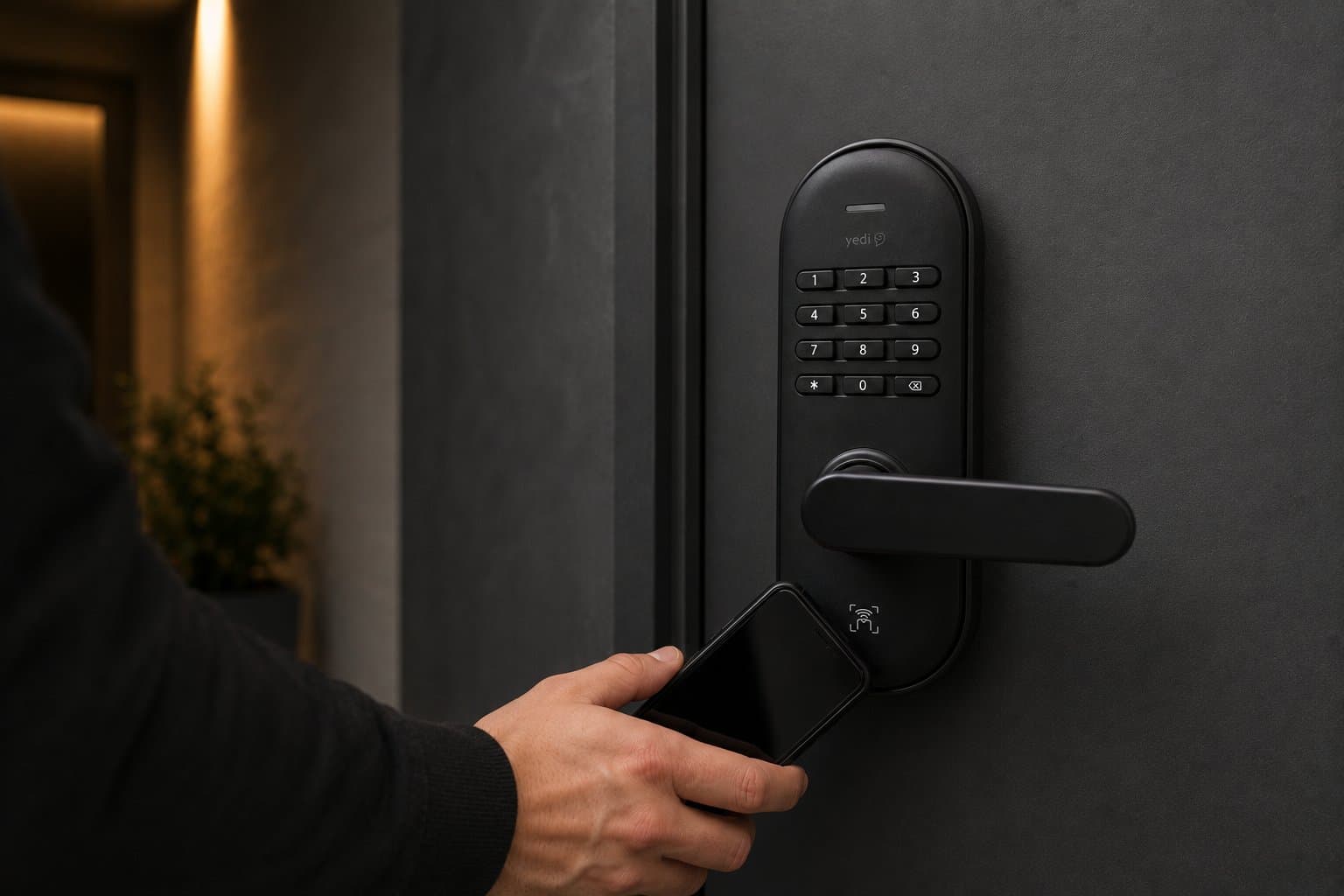
The same Yedi Pro retrofits any commercial door in your back of house. The configuration changes based on the door's job. A restroom door counts entries and triggers cleaning prompts. A stockroom door rotates codes and logs personnel. A supply closet tracks consumption against access. An office door runs a tighter access policy than a public-facing restroom would.
Your dashboard shows all of them. Filter by location, by door type, by employee, by time. The data is consistent across every door because it comes from the same hardware running the same firmware sending the same events to the same backend.
In pilotThe first store you put Yedi in gives you a baseline. The tenth gives you patterns. The hundredth gives you anomaly detection that would be impossible at smaller scale — the store whose stockroom traffic spiked on a Tuesday in the way that always precedes a count problem, the location whose restroom is degrading on a curve that predicts a 1-star review in two weeks.
This is the intelligence layer Yedi is building now. It learns what normal looks like for your operation specifically — not the industry, yours — then surfaces the moment normal stops being normal, and at which door, in which store, on which shift. We are piloting it across multi-location accounts today, and we label it honestly: proven where it is proven, in pilot where it is still earning its place.
For retailers with their own customer-facing app, Yedi disappears into it. The customer taps your loyalty button, your branded unlock, your reward redemption — the restroom opens. Yedi never appears in the customer's experience. You own the brand, the data, and the relationship. For the first time, you also know which identified customers are physically in your store at which moment.
For operators who don't run their own app, the Yedi dashboard handles everything. For developers, our REST API and webhook system handle events as they happen — pipe entries into your data warehouse, push alerts into Slack, plug into the workforce management or POS system you already run.
We structure pilots for multi-location operators. Hardware at cost for the pilot window, white-glove install, a dedicated account manager, and rollout pricing locked at pilot start.